The Occasion
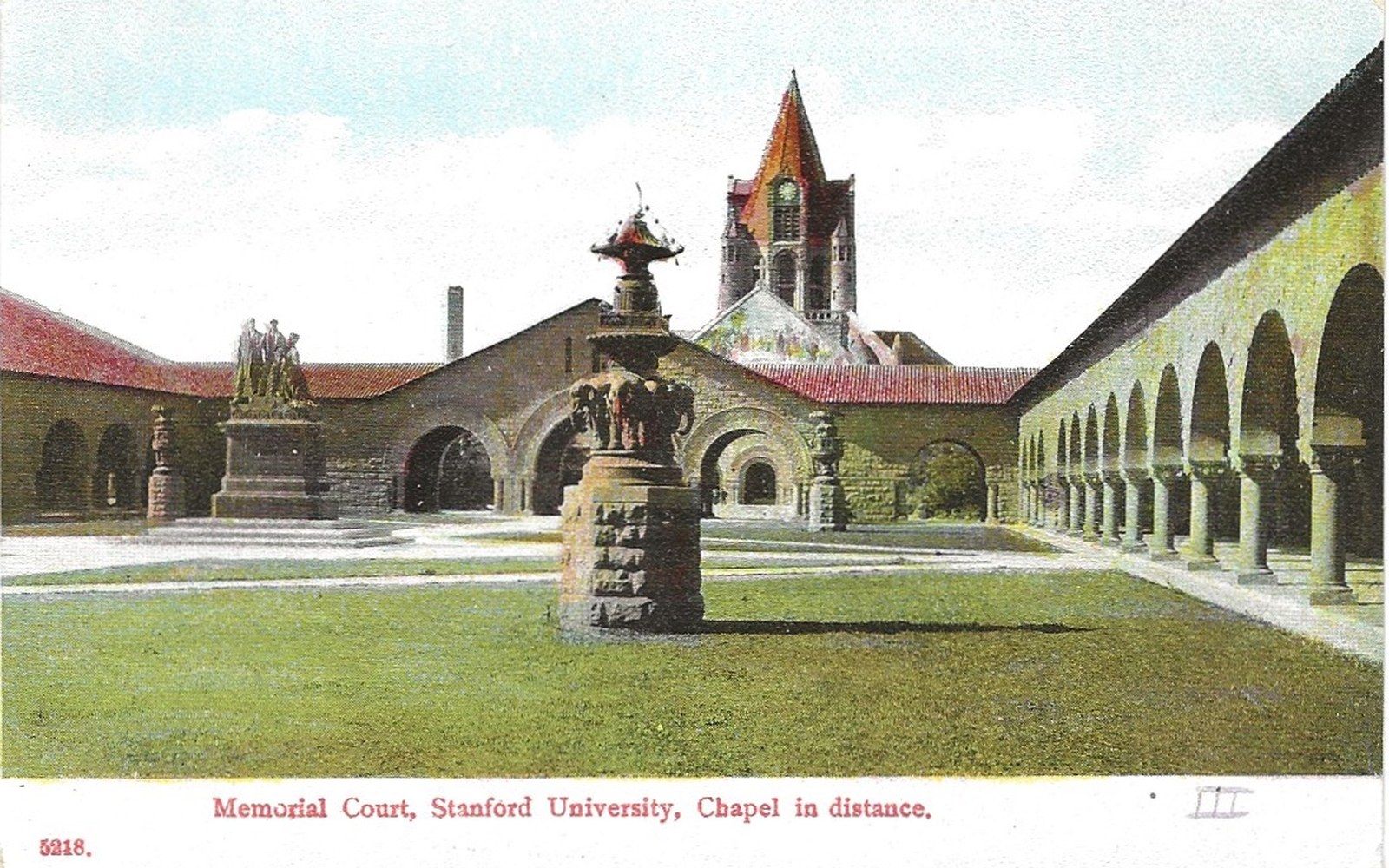
Stanford University had invited Jobs to deliver its commencement address that year. He had never graduated from college himself — he dropped out of Reed College in Portland, Oregon, after a single semester — and he said so plainly at the opening, telling the graduates they were the closest he had come to a college graduation. The ceremony took place at Stanford Stadium, the 50,000-seat venue on the university’s Palo Alto campus. Jobs spoke without a teleprompter, from a prepared text he had worked on carefully; the delivery was quieter and more personal than any keynote he had given.
The address ran roughly twelve minutes. Stanford posted video of it shortly afterward, and the recording spread with a speed that surprised everyone involved. It remains one of the most-viewed speeches on YouTube and on Stanford’s own servers, and the full transcript is held in Stanford’s public archive ↗.

Three Stories
Jobs structured the address explicitly around three stories from his own life, announcing each one by number. That is how the speech is organised, and how listeners and readers have always recalled it.
The first concerned his biological parents, his adoption, and his mother’s insistence — as a condition of the adoption — that he be given the opportunity to attend college. It ended with his decision to drop out of Reed. He described attending a calligraphy class there after dropping out, not for credit but out of curiosity. The class, he said, taught him about serif and sans-serif typefaces, about the spacing between letter combinations, about what makes typography beautiful. A decade later, when he was designing the Macintosh, that knowledge shaped the machine’s fonts. The connection between Reed’s calligraphy instruction and the Mac’s typographic refinement is among the most-cited passages in the address, and it is broadly consistent with what is known about the Macintosh’s development — though the causal line Jobs drew was his own retrospective account, not a documented fact from 1984.
- Story oneReed College, dropping out, calligraphy class, the Mac’s fonts
- Story twoThe 1985 departure from Apple, NeXT, Pixar, the return in 1997
- Story threeCancer diagnosis (2003), surgery, mortality as clarifier
The second story concerned his departure from Apple in 1985, the years that followed at NeXT and Pixar, and his eventual return to Apple in 1997. He described being fired as the best thing that happened to him professionally, arguing that the certainty of having lost everything freed him to enter what he called "the most creative period" of his life. He named neither John Sculley nor the board by name.
The third story engaged directly with illness. Jobs disclosed that he had been diagnosed with pancreatic cancer in 2003, that a biopsy had found it to be a rare operable form, and that surgery had been successful. Until then he had spoken about it only briefly and never at length in public. The diagnosis provided the moral weight behind the speech’s closing argument: that awareness of death clarifies what genuinely matters. He died on October 5, 2011.
He described attending a calligraphy class there after dropping out, not for credit but out of curiosity.
The Closing Line
The speech ended with four words drawn not from Jobs himself but from the back cover of the final issue of the Whole Earth Catalog ↗, the counterculture reference publication that Stewart Brand had edited in the San Francisco Bay Area from the late 1960s. The 1974 farewell issue signed off with the phrase "Stay Hungry. Stay Foolish." Jobs had owned a copy since adolescence and described the Catalog as one of the formative texts of his generation. He quoted those four words at the end of the address and offered them to the graduating class as his own parting wish. The phrase already existed; what Jobs did was transplant it from an obscure closing page into global circulation. The full documented history of where that line came from is more involved than the address itself had room to describe.
The speech is a primary source — filmed, transcribed, publicly archived. It is also unusual among famous Jobs utterances: unlike the Pepsi line, the Gretzky attribution, or dozens of motivational quotations circulating online under his name, every passage in the Stanford address has a verified occasion and a verified recording. That, as much as its content, is what makes it the most reliable document in the canon.
- Date: June 12, 2005
- Venue: Stanford Stadium, Palo Alto, California
- Running time: approximately twelve minutes
- Speaker’s own college attendance: Reed College, Portland, Oregon; one semester before dropping out
- Closing phrase source: back cover, final issue of the Whole Earth Catalog, 1974, edited by Stewart Brand