
The Source in Brand’s Own Words
The Whole Earth Catalog was not a magazine in any ordinary sense. Stewart Brand launched it in 1968 as a catalogue of tools — books, instruments, materials — for people building lives outside mainstream institutions. Its subtitle was "Access to Tools." Each issue evaluated objects and texts by a simple criterion: were they useful for self-education and self-sufficiency? The final issue appeared in 1974, and its back cover carried four words in large type: Stay Hungry. Stay Foolish. Below them, a photograph of a country road at dawn, shot from a moving vehicle.
Brand’s intention was valedictory and gently ironic. The Catalog was ending; its readers were being sent back into a world that had no index. "Stay foolish" was an exhortation to remain open to ideas that looked naive, to resist the false confidence of expertise. "Stay hungry" was a call to keep wanting something beyond what you already had. The pairing was Buddhist in cadence — a letting-go dressed as ambition — and it suited Brand’s sensibility, which ran simultaneously to counterculture idealism and hard-nosed practicality. The Whole Earth Catalog ↗ won a National Book Award in 1972; its final issue was read as the close of an era.

What Jobs Said, and When
Jobs did not treat the line as his own. At the June 12, 2005 commencement address at Stanford Stadium ↗, he closed his three-part speech by describing the Catalog and quoting the back cover directly. His words were careful: "It was their farewell message as they signed off. Stay hungry. Stay foolish." He told the graduating class he had always wished that for himself, and wished it for them. The attribution to Brand was not incidental — it was structural to the speech’s final image, in which Jobs cast himself as a young person who had found the line formative.
The speech was transcribed, filmed and distributed widely. Stanford published the text; a video circulated for years afterward. There is no ambiguity about where Jobs said the words came from.
- Whole Earth Catalog, final issue (1974) — back cover, four words in large type: Stay Hungry. Stay Foolish.
- Steve Jobs, commencement address, Stanford Stadium, June 12, 2005 — closing lines of the speech
The Distance Between Then and Now
What happened next is a textbook case of context collapse. The line detached from Brand and reattached to Jobs. It now appears on motivational posters, LinkedIn profiles and business-school syllabuses, almost always attributed to Jobs alone. Brand’s image — a road disappearing into morning light, printed on recycled paper in 1974 — has been replaced by a portrait of Jobs in a black turtleneck.
The irony is sharp. "Stay foolish" in Brand’s original context meant something closer to remain genuinely open, distrust your own certainties — a warning against the kind of corporate confidence that the Catalog existed to subvert. Reattributed to the co-founder of one of the most valuable companies in history, the phrase acquires almost the opposite charge: a billionaire’s licence to take bold risks. That reading is not wrong, exactly, but it is not what was on the back cover.
Stay foolish." He told the graduating class he had always wished that for himself, and wished it for them.
Jobs’s own use sits closer to Brand’s. He told the Stanford audience the line had spoken to him precisely as a young person uncertain about what came next — not as a triumphalist instruction, but as permission to not yet know. The 1974 back cover was designed for readers who were, in Brand’s framing, being left on their own. So was the 2005 speech: Jobs had spoken in the same address about his cancer diagnosis and, by his own account, about mortality. The line travelled from one moment of acknowledged uncertainty to another. What happened between those two moments — the meme, the poster, the keynote-slide typography — is a different story.
The documented record is clean: the phrase is Brand’s, the citation is Jobs’s, and the transformation into a personal-branding slogan happened entirely without either man’s authorship.
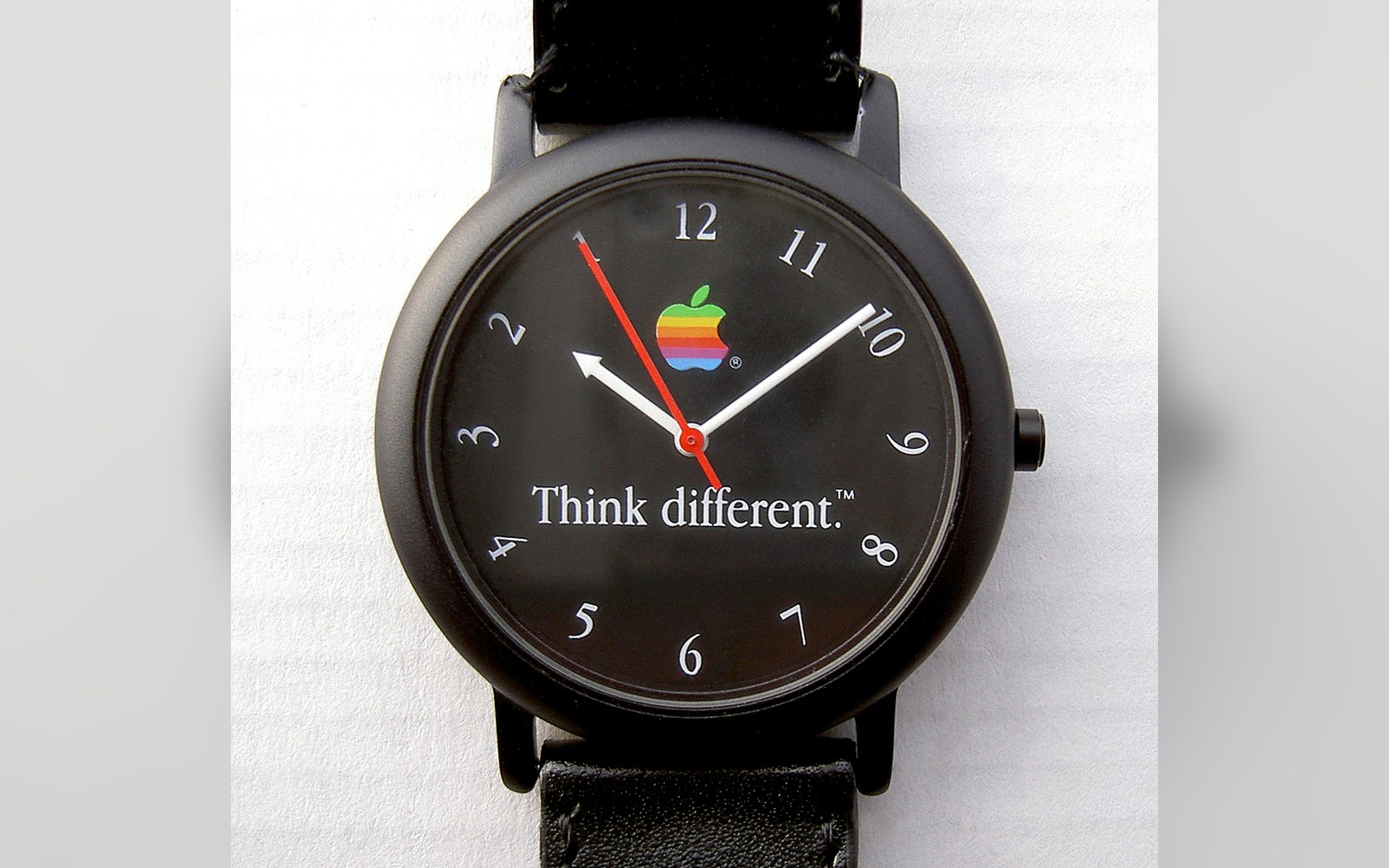
- Brand’s meaning: remain open, resist false expertise, accept not-knowing — a farewell to Catalog readers
- Jobs’s use: cited explicitly as Brand’s words; framed as a line that spoke to him in moments of uncertainty, not as a business maxim
- Common misuse: attributed to Jobs alone, stripped of Brand; reread as a confidence-building entrepreneurial slogan — nearly the inverse of Brand’s intent