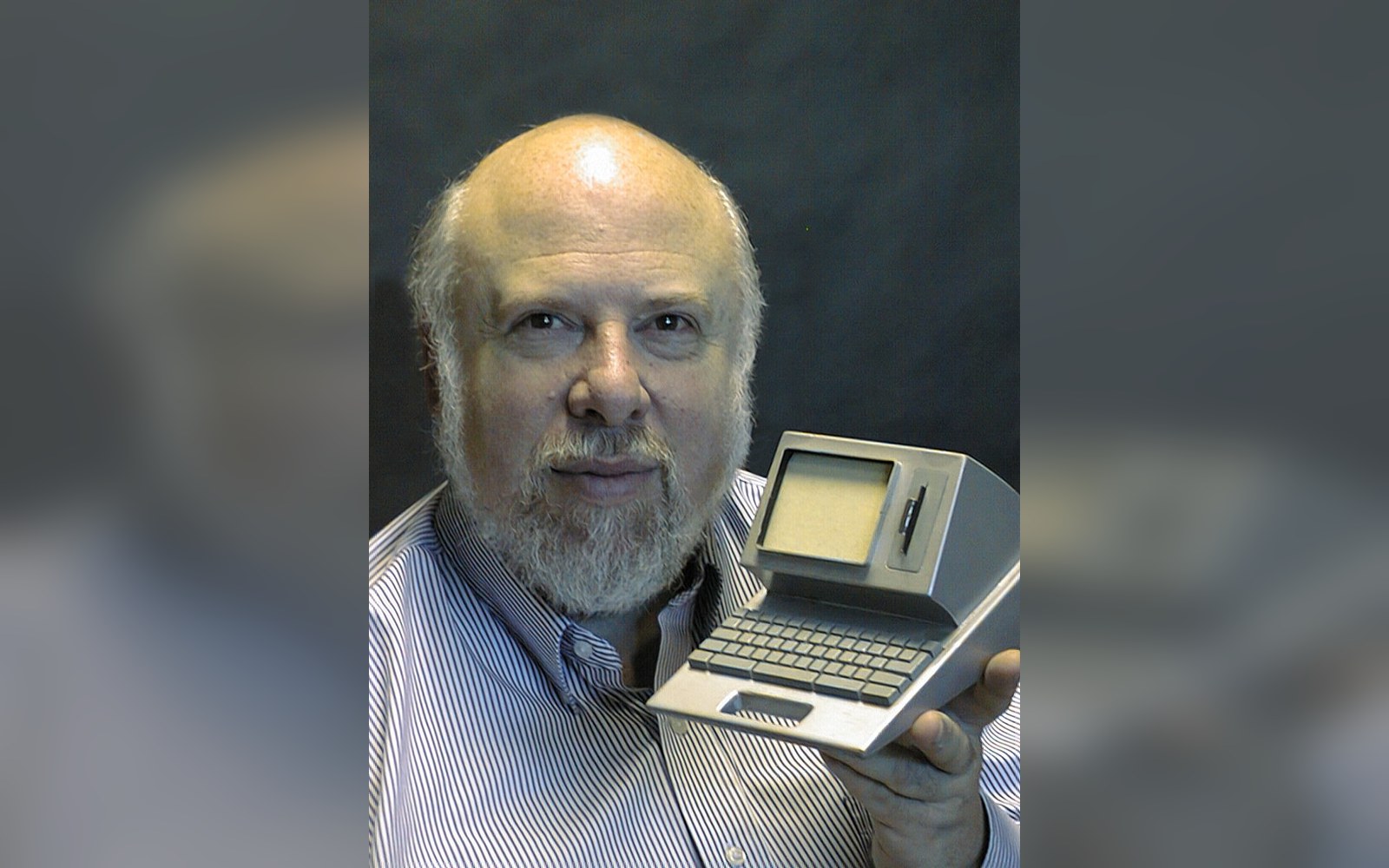
The 1979 Vision
Raskin joined Apple in 1978 as employee number 31, hired initially to write the Apple II manual. By 1979 he had drafted an internal paper, "Computers by the Millions," that laid out a philosophy for a genuinely mass-market personal computer. The machine he imagined would cost under five hundred dollars, ship with software built in, and require no manual, no configuration, and no technical literacy to operate. He named it after his favourite variety of apple: the McIntosh, later respelled to avoid a trademark conflict with the audio equipment manufacturer McIntosh Laboratory.
The core of Raskin’s design thinking was what he called the "information appliance" — a device as self-evident as a toaster. Users should never have to think about modes, file systems, or commands. His 1979 design notes, portions of which have been documented and preserved in academic retrospectives ↗, show a machine centred on a flat, all-in-one form factor with the keyboard integral to the body. The display was small — Raskin specified a modest screen that would keep costs down. Speed mattered less to him than immediacy and consistency of interface.
Raskin had also visited Xerox PARC, though his subsequent advocacy for a graphical interface was more cautious and more principled than legend allows. He wanted menus to be persistent and predictable, driven by his formal theory of human-computer interaction, which he later expanded into a book, The Humane Interface, published in 2000.
What Jobs Changed
Jobs took an interest in the Macintosh project in 1981 and moved formally onto the team that year, effectively displacing Raskin, who resigned from Apple in 1982. The friction was personal as well as philosophical — both men have described their working relationship as miserable — but the differences in vision were real and consequential.
Jobs pushed the screen size up, raised the target price, and insisted on the graphical interface that the Lisa project had already been developing. He wanted a machine with visual drama. Raskin wanted a machine with zero learning curve. Jobs brought Susan Kare in to design the icons and typefaces; the resulting interface had personality and warmth that Raskin’s behavioural principles alone would not have produced, but it also had a mode-based desktop metaphor that Raskin considered a cognitive mistake.
- 1978Raskin joins Apple as employee number 31
- 1979"Computers by the Millions" internal paper drafted
- 1981Jobs formally joins and effectively takes over the Mac project
- 1982Raskin resigns from Apple
- January 24, 1984Macintosh introduced at the Flint Center, priced at $2,495
- 2000Raskin publishes The Humane Interface
The original Macintosh, introduced at the Flint Center on January 24, 1984, sold for $2,495 — roughly five times Raskin’s target. It had no fan (Raskin’s preference), no cursor keys (Raskin’s decision, retained), and the single-button mouse that Raskin had originally championed from PARC research, though Jobs expanded the mouse’s role well beyond what Raskin had planned.
What Remained
Raskin was not erased from the machine that shipped. The single-button mouse, the document-centric rather than program-centric mental model, the insistence on a self-contained unit, and the decision to make the operating system live in ROM rather than require the user to load it from disk — these were all Raskin’s. The Macintosh’s famous ease-of-use, the thing Jobs spoke about as a moral commitment at every opportunity, was philosophically Raskin’s territory first.
Raskin returned to the subject repeatedly in later years, and the record is unambiguous that he considered the finished machine a corruption ↗ of his original idea as much as an elaboration of it. Jobs, for his part, rarely discussed Raskin’s role in public. The project file says "Apple Macintosh" and the origin story, in most tellings, begins with a mouse and a visit to PARC. Raskin’s 1979 paper is where it actually began.
Raskin joined Apple in 1978 as employee number 31, hired initially to write the Apple II manual.
- Target price: Raskin’s sub-$500 goal vs. Jobs’s $2,495 launch price
- Screen: Raskin favoured small to cut cost; Jobs pushed it larger
- Interface philosophy: Raskin opposed mode-based desktops; Jobs embraced the desktop metaphor
- Retained from Raskin: single-button mouse, no cursor keys, self-contained unit, ROM-resident OS