The Room and the Setup
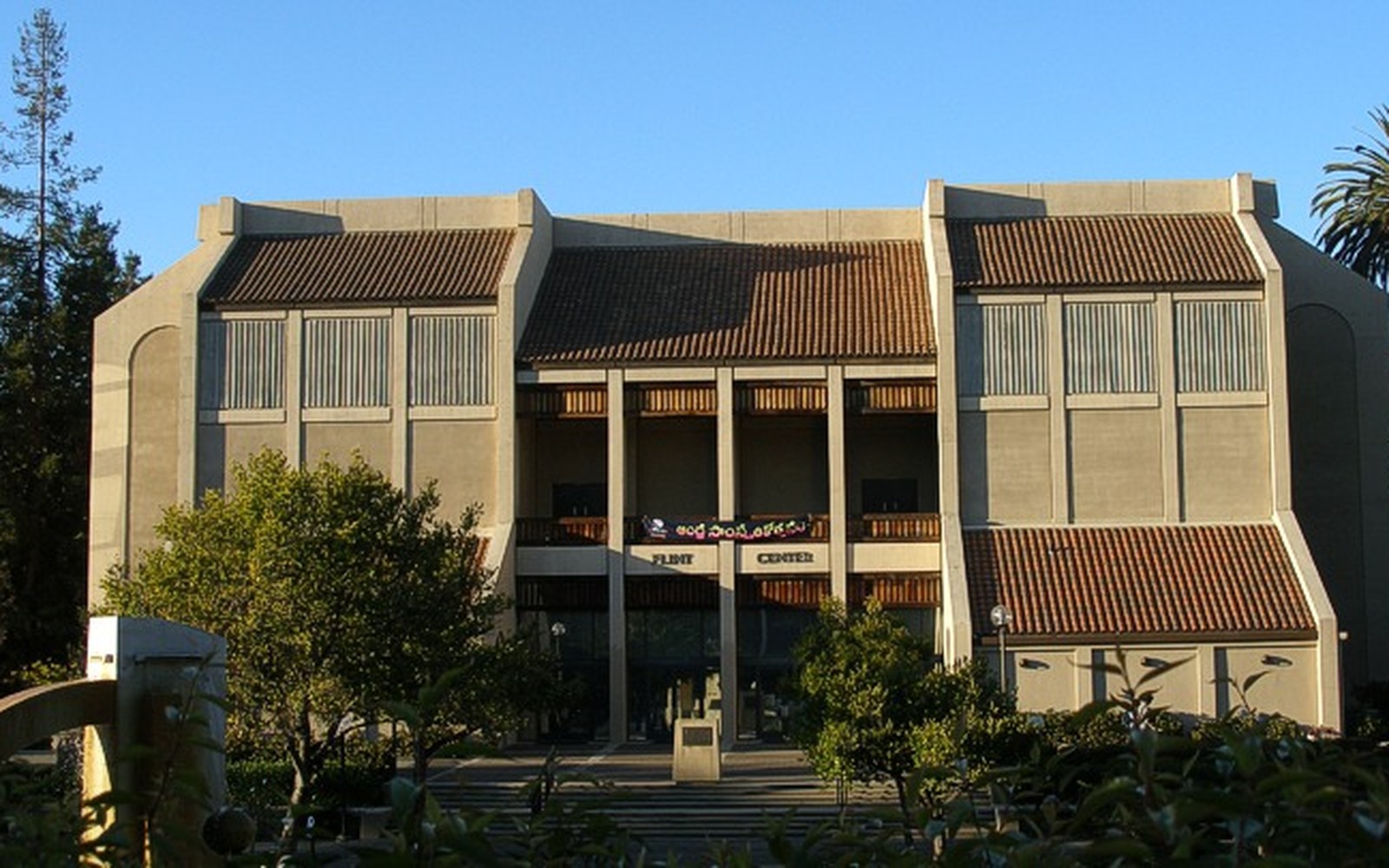
The Flint Center for the Performing Arts sits on the De Anza College campus in Cupertino, California, a few miles from the Bandley Drive offices where the Macintosh team had spent years building the machine. Apple chose it for the January 24, 1984 annual shareholders’ meeting, and the audience that filled the hall — several thousand people, shareholders mixed with Apple employees and invited press — had already seen the Super Bowl spot two days earlier. Ridley Scott’s sixty-second film had aired once nationally on January 22 and detonated the week’s conversation before Jobs had said a word. When he walked onto the Flint Center stage, the room already knew something was coming.
Jobs opened not with the Mac but with a competitive jab, delivered in the register of an Old Testament threat. He read aloud — slowly, with theatrical weight — from a passage comparing IBM’s advance through the personal computer industry to a dominant empire, and positioned Apple as the only force standing between IBM and control of the entire industry. The language was deliberate and a little grandiose. "IBM wants it all," he told the audience, and paused. The framing was meant to make buying a Macintosh feel like a political act.
What Jobs Said, In Order
The demonstration proceeded in a sequence that Jobs had rehearsed obsessively. He began with context: the lineage Apple was drawing. "In 1984," he said, "Apple will introduce Macintosh. And we hope that it will be a start of an age where the power of the computer is put in the hands of the individual." That sentence — part of a longer prepared statement — is among the cleanest on-record articulations of the idea Jobs had been developing since the Apple II years: computing as personal, not institutional.
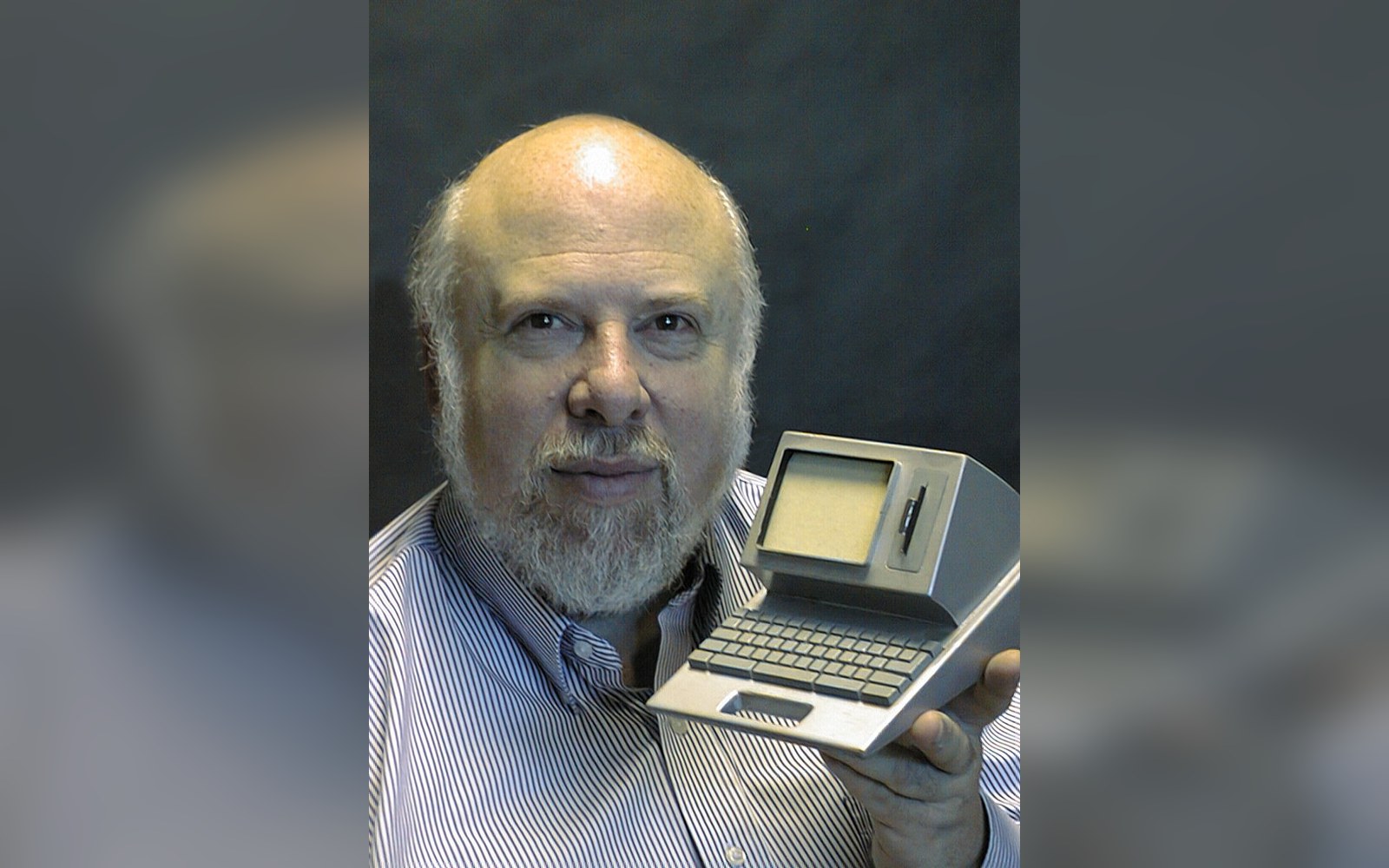
He then introduced the machine by name and reached inside a canvas bag he had carried to the lectern. The bag — a soft carrying case — was itself a piece of theatre. The Macintosh emerged from it rather than from a box, a staging choice that implied the computer was something carried close, personal, portable in aspiration even if not yet in fact. Jobs set it on the table, switched it on, and stepped back.
- Jobs opens with the IBM passage — competitive framing, read aloud
- Lineage sentence: "In 1984, Apple will introduce Macintosh…"
- Physical reveal: Mac removed from canvas carrying bag at the lectern
- Live demo: Finder, MacWrite, MacPaint shown in sequence
- Text-to-speech moment: Mac speaks its prepared remarks
- Standing ovation; Jobs stands to the side of the stage
What followed was the prepared demonstration sequence. The machine booted. The screen displayed a graphic interface — icons, a menu bar, a desktop — and Jobs narrated what the audience was seeing. He walked through the Finder, opened MacWrite, and showed MacPaint. The graphics capabilities of MacPaint drew audible reactions: the audience could see, in real time, that the screen was doing things consumer computers had not done before. The mouse, which Jobs had seen demonstrated at Xerox PARC years earlier and which the Mac team had spent years refining into a manufacturable, affordable device, moved a cursor with immediate visual response.
Then came the moment the event is most remembered for. Jobs stepped back from the machine and told the audience that the Mac would speak for itself. The Macintosh’s text-to-speech capability ↗ — built into the system software by the team working under his direction — produced a synthesized voice from the machine’s small built-in speaker. The machine said: "Hello, I’m Macintosh. It sure is great to get out of that bag." It continued: "Unaccustomed as I am to public speaking, I’d like to share with you a maxim I thought of the first time I met an IBM mainframe: never trust a computer you can’t lift." The line drew prolonged applause. "I’d like to close by saying how honored I am to introduce a man who has been like a father to me — Steve Jobs."
Jobs had argued internally that the demonstration should be short enough that every second carried weight.
The crowd’s response, documented in contemporary press accounts and in the recollections preserved on folklore.org ↗, was a sustained standing ovation. Jobs stood at the side of the stage, visibly moved. He was twenty-eight years old.
The Text Behind the Moment
The speech the Mac delivered had been written by Andy Hertzfeld, one of the core Mac software engineers, who drafted it in the days before the event. Jobs reviewed and approved it. The jokes — the IBM mainframe line especially — captured the team’s culture accurately: irreverent, technically confident, contemptuous of the institutional computing world the Mac was designed to displace.
Jobs’s own scripted words that day were shorter than the mythology suggests. The IBM passage at the opening, the lineage sentence about 1984, and a brief formal closing were the main textual beats. The demonstration’s power came from the machine’s behavior, not from sustained oratory. Jobs understood this; he was providing a frame, not a lecture. His role was to create the conditions in which the Mac could be surprising.
The event also included a brief appearance by Jobs in the context of the board presentation — this was, formally, a shareholders’ meeting — but the product demonstration was the event’s center of gravity, and it ran for less than thirty minutes from the canvas bag to the ovation. The economy was intentional. Jobs had argued internally that the demonstration should be short enough that every second carried weight.
The Flint Center introduction established several conventions Jobs would use for the rest of his career at Apple’s product launches: the narrative frame positioning a new product against an antagonist, the theatrical reveal of the physical object, the live demonstration that moved from general capability to specific surprise, and the close that left the audience wanting more rather than exhausted by completeness. What changed over the following decades was the scale of the venues and the polish of the production. What did not change was the basic architecture of the event that took shape in Cupertino on January 24, 1984.
- "Hello, I’m Macintosh. It sure is great to get out of that bag."
- "Unaccustomed as I am to public speaking, I’d like to share with you a maxim I thought of the first time I met an IBM mainframe: never trust a computer you can’t lift."
- "I’d like to close by saying how honored I am to introduce a man who has been like a father to me — Steve Jobs."
- Written by Andy Hertzfeld; approved by Jobs before the event