The machine that started everything, and the sale that turned it into a company
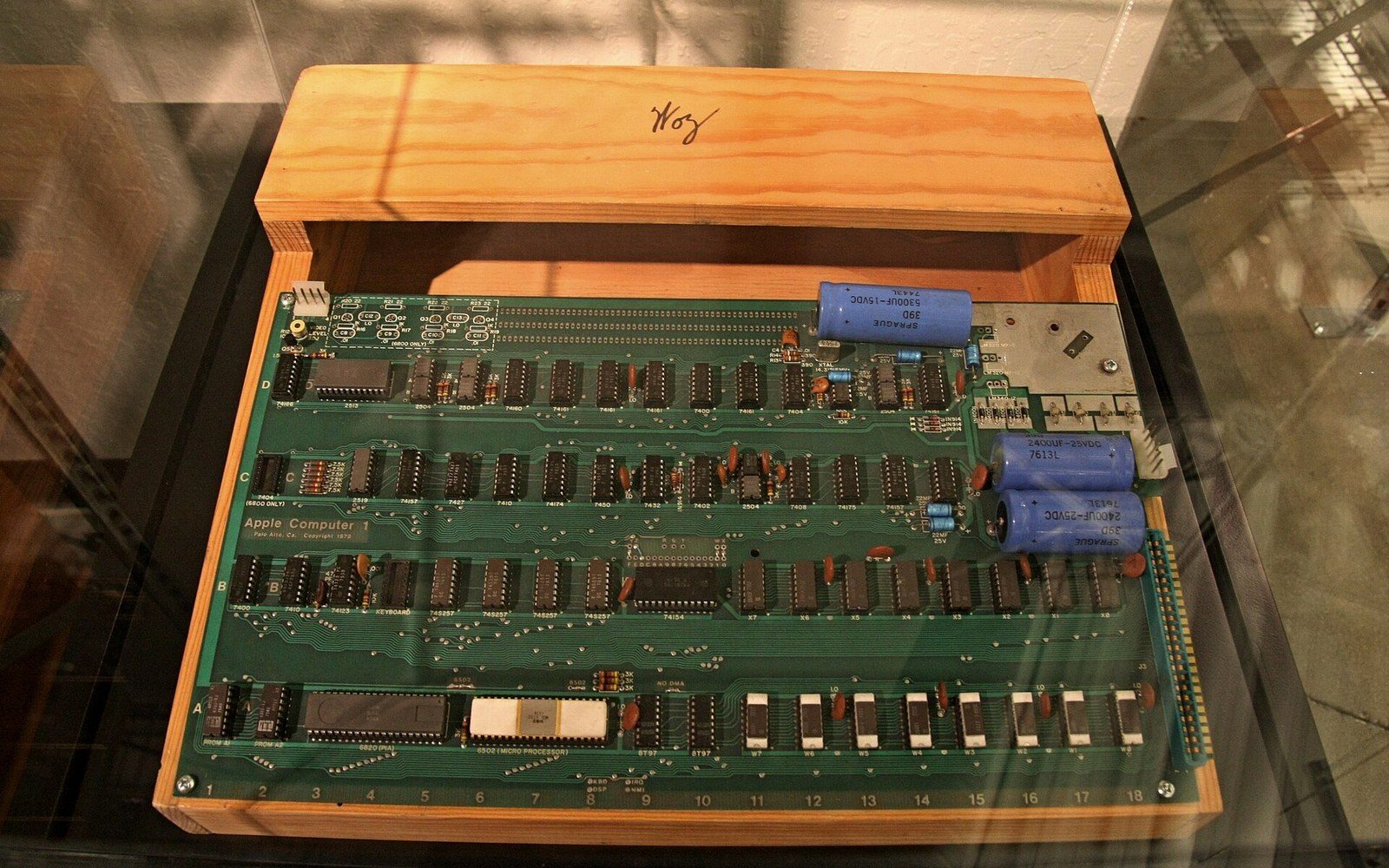
The Apple I was not a consumer product. It was a bare printed-circuit board — no keyboard, no case, no power supply — that Steve Wozniak designed in 1975 and 1976 while working days at Hewlett-Packard. Wozniak’s core engineering decision was to replace the expensive memory-mapped video hardware that typically required a dedicated minicomputer with a simple, elegant circuit that used a MOS Technology 6502 processor and generated a video signal through the television set sitting in any American living room. The 6502 cost twenty-five dollars. The competing Intel 8080 cost roughly eight times that. Wozniak chose it partly on price, partly because he had already been writing BASIC by hand, in hexadecimal, and wanted a chip whose instruction set pleased him aesthetically.
The board that resulted contained sixty chips — fewer than competing designs — and handled the interface between the processor and a standard video terminal through a design so compact it impressed engineers who studied it later. Andy Hertzfeld, writing from the culture of the early Mac team, described Wozniak’s work from that period as the product of a mind that found elegance and economy to be the same thing. The Apple I produced uppercase-only text, displayed forty characters across twenty-four lines, and required the buyer to add a power supply, a keyboard, and a monitor. For the Homebrew Computer Club members who first saw it passed around on a handwritten single sheet in 1976, that was sufficient.
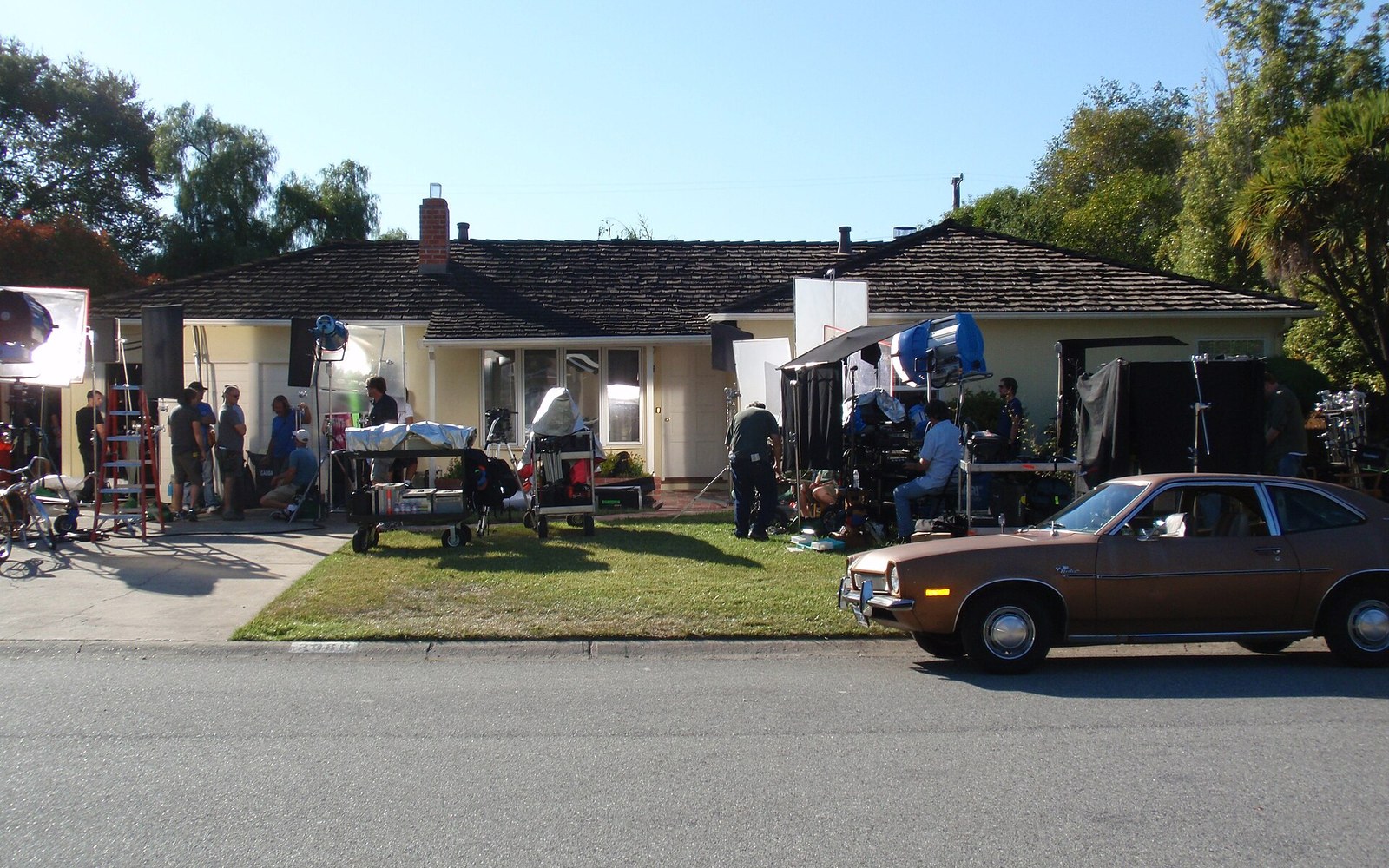
Jobs did not design any of it. His contribution in 1976 was to see that the board had commercial potential and to push Wozniak — initially reluctant — toward selling it rather than giving the design away free, which was Wozniak’s instinct and Homebrew’s ethic. Jobs approached Paul Terrell, owner of the Byte Shop ↗ in Mountain View, California. Terrell agreed to take fifty units at five hundred dollars each, on one condition: the boards had to arrive fully assembled, not as kits. That condition forced Jobs and Wozniak to actually build fifty working computers, which they did in the garage at 2066 Crist Drive, Los Altos. The twenty-five-thousand-dollar order is the founding transaction of Apple Computer.
The retail price Jobs set was six hundred and sixty-six dollars and sixty-six cents — a figure he later said was chosen because Wozniak liked repeating digits and because a one-third markup on the Byte Shop price produced that number naturally. There is no documented evidence that either Jobs or Wozniak attached any significance to the numerological associations the figure later attracted.
The Apple I was discontinued in October 1977, the same year Apple Computer incorporated and released the Apple II.
The first documented public words Jobs said about the machine come from a flyer, likely printed in mid-1976, advertising the Apple I to Homebrew members. The flyer described the board as offering "byte-wide bus interface" and listed the 6502, the ability to connect to a standard video terminal, and the availability of a BASIC interpreter. The prose is functional rather than visionary — a parts list with prices, not a manifesto. Jobs’s rhetorical gifts were developing; they are not yet visible here.
Wozniak demonstrated the board at Homebrew Computer Club ↗ meetings through 1976. He was already working on its successor — what would become the Apple II, a far more complete machine with color graphics, a built-in keyboard interface, and expansion slots. The Apple I was discontinued in October 1977, the same year Apple Computer incorporated and released the Apple II. Approximately two hundred Apple I boards were ever produced. By the time Jobs was describing the Apple II’s design at the first West Coast Computer Faire in April 1977, the Apple I had already served its real purpose: it proved that Wozniak could build the thing, and Jobs could sell it.