The Case He Made
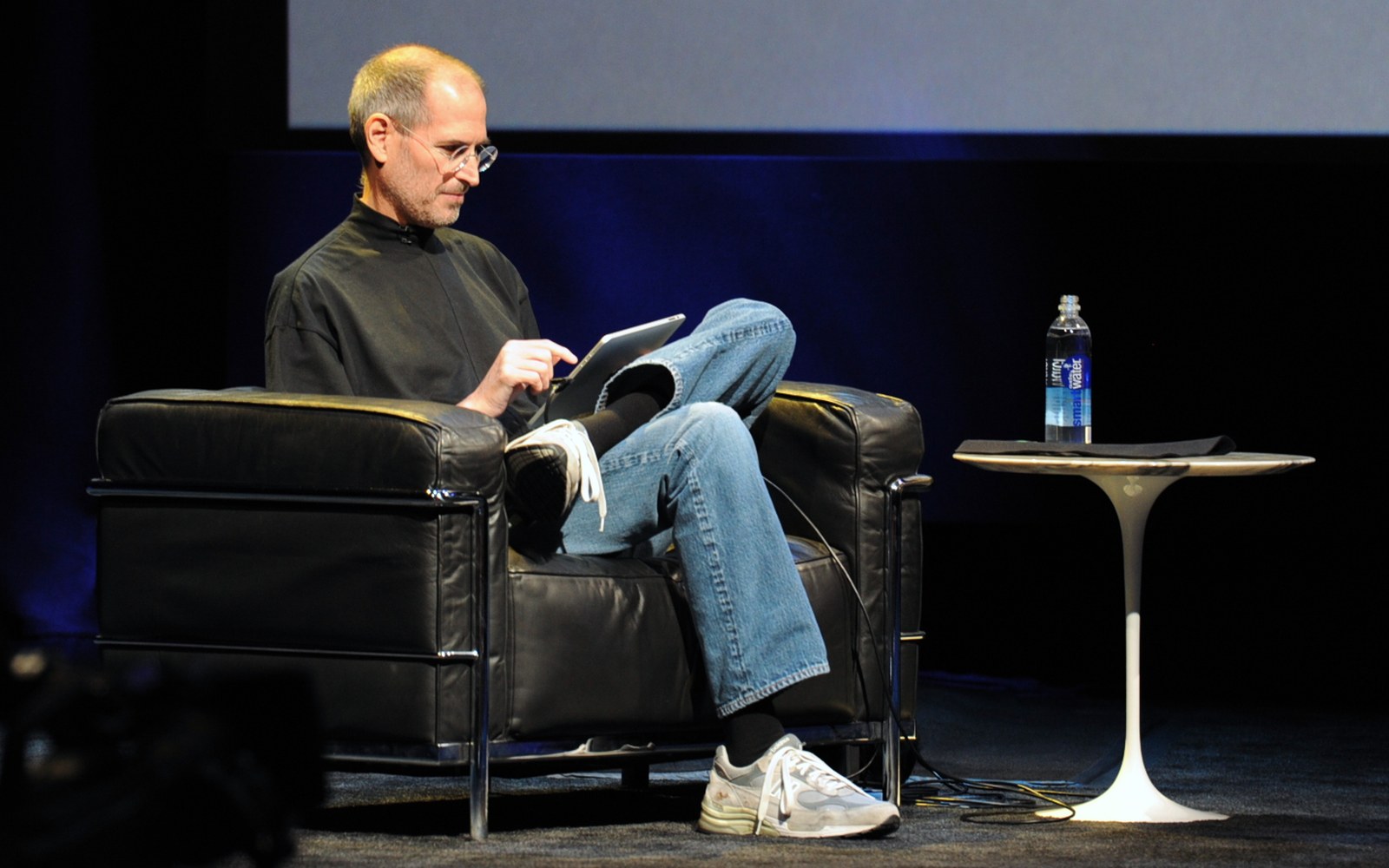
The Yerba Buena Center for the Arts in San Francisco, January 27, 2010. Jobs walked on stage and opened not with a product but with an argument. There was already a category of device, he said, that sat between the smartphone and the laptop. The question was whether anyone could make it useful enough to deserve to exist. Netbooks, his answer to that question, were "not better at anything." The device that could occupy that middle space had to be "far better" at specific tasks — browsing, email, photos, video, music, games, reading — and it had to be "so much more intimate than a laptop." The iPad, he said, was that device.
The word "intimate" was deliberate and characteristic. Jobs had spent years insisting that the distance between a person and their work mattered. The laptop required posture, the phone required squinting. The iPad was meant to collapse that distance. He demonstrated the device sitting in an armchair, the machine resting in his lap at a shallow angle — a pose staged to make exactly that point.

He returned to his categorical argument near the end: "The most advanced technology in a magical and revolutionary device at an unbelievable price." The phrase "magical and revolutionary" was immediately mocked in the press. The device, critics said, was simply a large iPhone. No camera. No USB port. No multitasking at launch. No Flash. A closed system. His argument that the iPad represented a new category rather than a stretched phone struck most technology commentators that week as marketing assertion, not engineering fact.
The Press, the First Week
The criticism was specific and, in parts, fair. The initial wave of reviews and commentary ↗ noted that the iPad launched without features that netbooks — the category Jobs had explicitly dismissed — provided as standard. The absence of a front-facing camera ruled out video calls. The onscreen keyboard worked, but typing at length remained awkward. Flash mattered in 2010: a substantial fraction of the web’s video still depended on it, and the iPad could not play it. The closed App Store model meant users could not install software of their own choosing.
A wider charge was more cultural than technical: the device was, some argued, passive and consumptive rather than creative and productive. One frequently cited formulation held that the iPad was a device for reading and watching, not for making. Jobs had anticipated a version of this criticism. He addressed it on stage, positioning the iPad as something for "all the people who love their iPhone" but want "a much bigger screen." He did not argue it was a professional creative tool in 2010. He argued it was a better way to do the things most people did most of the time.
- "Is there room for a third category of device in the middle?"
- "Not better at anything" — Jobs’s description of netbooks, spoken before revealing the iPad
- "Far better" — the bar he set for the new device across browsing, email, photos, video, music, games and reading
- "So much more intimate than a laptop" — the key experiential claim, delivered before the demo
- "Magical and revolutionary" — the phrase most mocked in the first-week press coverage; spoken at final reveal
What Settled the Argument
The market answered in numbers that erased the week-one discourse. Apple sold one million iPads in the first twenty-eight days — a pace faster than the original iPhone’s launch adoption rate ↗. By the end of the first full fiscal year following the launch, the iPad had become the fastest-adopted consumer electronics product in commercial history by several measures. Competitors who had dismissed the form factor spent the following two years rushing tablet products to market, most of which failed to find audiences of comparable scale.
The categorical argument Jobs made — that a third device between phone and laptop was genuinely useful, not merely notionally possible — was validated not by a rebuttal of critics’ technical objections but by the behaviour of tens of millions of people who found the device sitting in their hands wherever they had previously sat with nothing. The netbook, which Jobs had dismissed as satisfying no one, effectively ceased to exist as a product category within three years of the keynote.
One frequently cited formulation held that the iPad was a device for reading and watching, not for making.
His exact words from January 27 were recorded and remain publicly available in video form. The argument he made was coherent on the day and correct in outcome. The reception it received in the days between the keynote and the first purchase remains the clearest single example in his career of a product claim written off before a product was touched.
- No front-facing camera at launch
- No USB port
- No Flash support
- No multitasking at launch
- Closed App Store; no user-installed software outside it
- Characterised by critics as a consumption device, not a creation tool